
Activist Style
What Is Civil Disobedience? A Clear Guide
Understand civil disobedience, how it differs from protected protest, and how to approach civic action with care.

Civil disobedience is a public, deliberate refusal to follow a law, rule, or order that a person believes is unjust. It is often discussed alongside marches, speeches, petitions, and other civic action, but it is not the same thing. A peaceful protest can be protected expression. Civil disobedience may deliberately cross a legal line, which can carry real consequences.
That distinction matters. It helps people avoid treating every disagreement as a reason to take the same risk, and it keeps the focus on the people most affected by the injustice being challenged. This guide offers civic education, not legal advice. Local law, event rules, immigration status, employment, caregiving, health, and personal history can all change what a risk means for one person.
What makes an action civil disobedience?
People use the term in different ways, but the basic idea is specific: an action is public, intentional, and connected to a claim that a law or official rule is unjust. The aim is usually to call attention to the injustice and press for change, not to hide the act or avoid all responsibility for it. That is different from quietly breaking a rule for personal convenience.
In his 1963 Letter from Birmingham Jail, Martin Luther King Jr. defended direct action against segregation while making a moral distinction between just and unjust laws. The letter belongs to a particular movement, place, and history. It should not be used as a shortcut for claiming that every action someone favors carries the same moral weight.
Organized nonviolent action also involves preparation. It can include learning from people directly affected, setting a narrow goal, understanding likely consequences, and deciding who is prepared to take which role. A person can support a campaign without taking part in its highest-risk action. There is no civic prize for choosing a risk that is not yours to carry.
How it differs from protected protest
Marching, holding a sign, chanting, leafleting, attending a public meeting, and speaking about public issues are common forms of protest. In the United States, the First Amendment protects speech and peaceful assembly, though governments can impose some narrow rules about time, place, and manner. The ACLU’s Protesters’ Rights guide explains that rights are strongest in traditional public forums such as streets, sidewalks, and parks, while the details depend on the setting.
Civil disobedience is different because it can involve knowingly refusing a rule or law. A sit-in that blocks access, ignoring a lawful order, or entering a place where you do not have permission can create legal exposure even when the purpose is nonviolent. Protected speech is not a blank check, and civil disobedience is not automatically protected because the cause matters deeply.
Before joining an action, separate the message from the tactic. Ask: What is the campaign asking for? Who planned the action? What conduct is expected? What could happen if the plan changes? A credible organizer should be able to explain the purpose and the level of risk without pressuring you to agree on the spot.
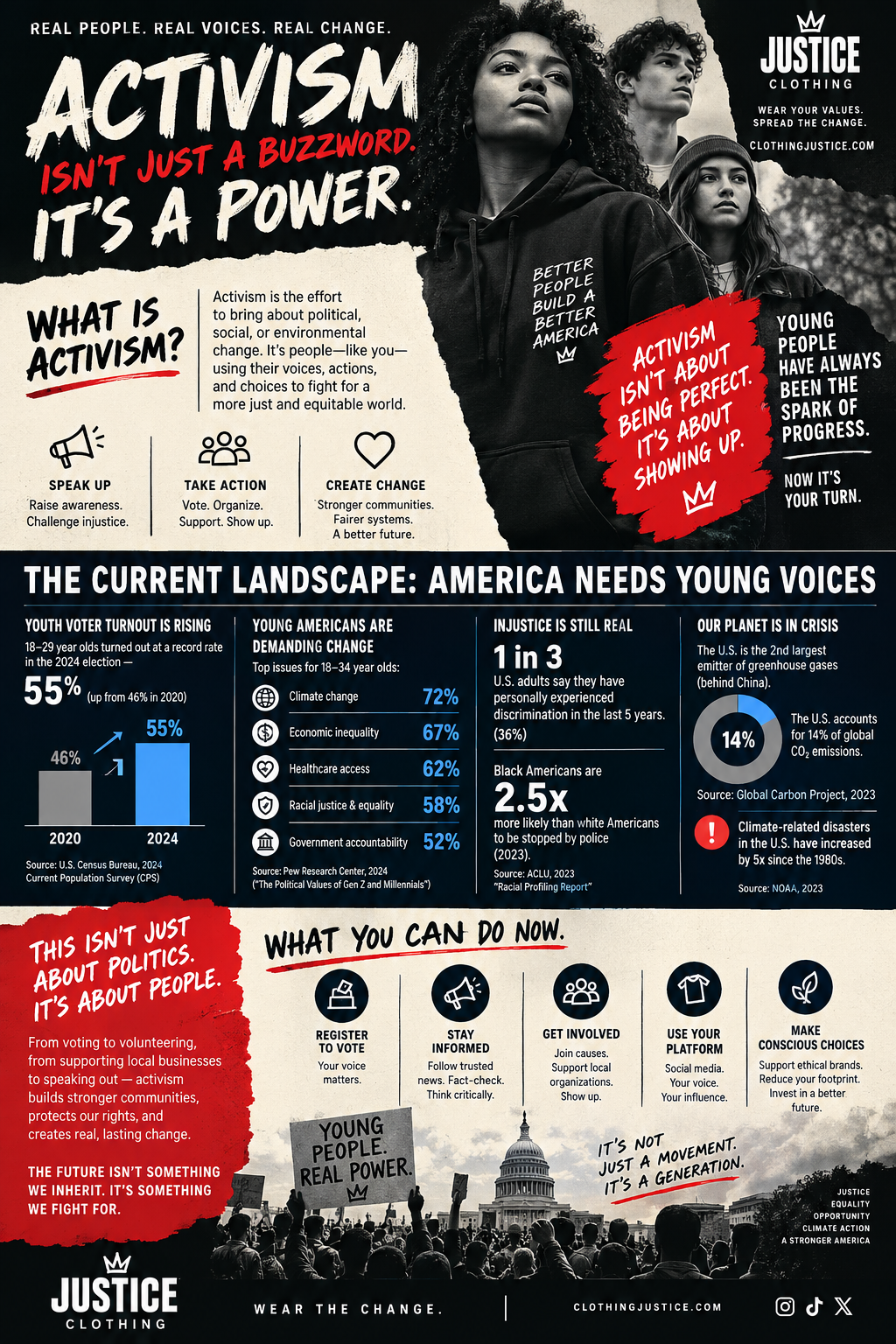
History is a source of questions, not a costume
People often reach for famous moments when trying to explain civil disobedience. History can be a powerful teacher, but analogies need care. The Birmingham campaign emerged from years of local organizing, legal challenges, faith communities, boycotts, training, and leadership by Black residents who faced segregation every day. A photograph, quote, or tactic lifted out of that history cannot do the work of understanding its conditions.
Instead of borrowing the authority of the past, ask what it can teach you about preparation and accountability. Who named the harm? What specific change was sought? What relationships made the action possible? What risks did participants face, and who had the power to impose them? Those questions keep history from becoming a decorative backdrop for an action that has not earned its own clarity.
They also make room for humility. A tactic that was meaningful in one city, at one time, against one system may not serve a different community now. The strongest support begins with the current campaign’s own analysis, leadership, and request. If you are new to an issue, listening is an active contribution, not a delay before the “real” work begins.
Why consent and capacity matter
A campaign’s urgency does not erase differences in risk. An arrest, citation, missed shift, public photo, or travel delay can affect people very differently. A student, a person with an open court matter, an immigrant, a caregiver, a worker with little leave, or someone managing a disability may have constraints that others do not share. These are not excuses. They are the real conditions that responsible organizing needs to respect.
Consent means knowing enough to make your own decision. It means no one should be surprised by an organizer’s plan, asked to carry an item they do not understand, or swept into a role they never agreed to. It also means respecting a no. Someone can donate, research, make food, help with child care, share verified information, attend a meeting, or contact a decision-maker without joining a disruptive action.
If an action does not fit, choose a role that does. The guide to becoming an activist offers a practical way to start with one issue and one sustainable task. Consistent support is more useful to a movement than a dramatic promise that leaves someone overextended or unsafe.
Start with the people closest to the issue
Before adopting a tactic, listen to the people and communities living with the problem. Look for organizations with a stated goal, a recent public record, and a clear way to verify what they are asking for. Read their own materials before turning a headline or viral clip into a personal campaign.
This is especially important when you are supporting a community that you do not belong to. Solidarity is not speaking over people, choosing a tactic for them, or claiming their experience as your own. It can mean following their lead, sharing their verified request, and making room for their knowledge even when it complicates your first instinct.
Clothing Justice’s Action Desk and free civic resources are places to continue learning. When a specific claim matters, go to the original public record, law, agency, or community organization rather than relying on a slogan alone.
Prepare without pretending there is no risk
Preparation is not a guarantee. It is a way to make choices with clearer information. Read the organizer’s current instructions, confirm the location and accessibility details, and decide what you will and will not do before you arrive. Tell someone you trust where you plan to be, and make a plan for getting home.
For general protest information, the Electronic Frontier Foundation’s protest privacy guide explains that photos and posts can reveal identifying details about people. Ask before sharing identifiable images. If you need advice about a specific legal, employment, immigration, or safety situation, speak with a qualified local professional who can consider the facts that a general guide cannot.
Bring only what is appropriate for the event and your needs. Review any venue rules yourself. If someone pushes you to ignore a boundary you have set, step back. A movement worth supporting should make room for informed participation, not turn uncertainty into shame.
Questions to answer before you join
A few direct questions can make an invitation easier to evaluate. First, what is the exact goal, and what decision-maker or institution can act on it? Second, whose leadership is guiding the campaign? Third, what does the organizer expect participants to do, and what outcomes have they identified if authorities or venue staff respond? Clear answers do not remove risk, but vague answers are a reason to slow down.
Then ask yourself what you can consent to. Are you comfortable with the time, visibility, travel, physical demands, and potential consequences? Do you understand what information might be collected or shared? Have you set a check-in plan with someone you trust? A thoughtful yes can be powerful. So can a well-informed no, or a decision to contribute in a different way.
Finally, consider what happens after the moment. A public action should connect to a next request, a meeting, a vote, a legal case, a mutual-aid effort, or another form of sustained work. If no one can explain the follow-through, ask for it. A campaign becomes easier to support when participants know how today’s action relates to tomorrow’s work.
Keep a record of the sources and instructions you relied on, especially when plans change quickly. Save the organizer’s current contact route and any public update that explains a new location, schedule, or request. That small habit makes it easier to correct a mistaken assumption and to help another person find the same reliable information.
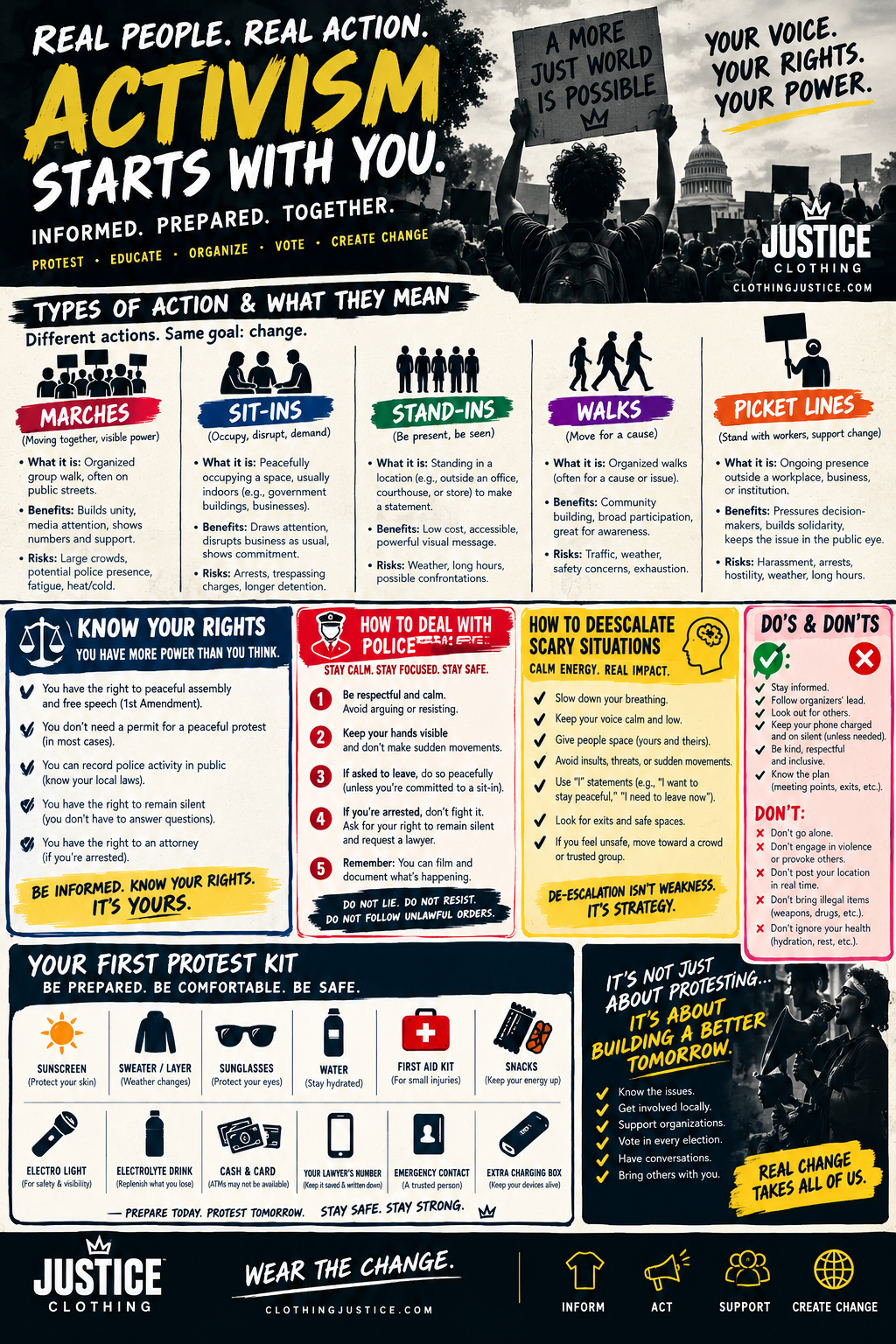
Choose the next useful action
Not every injustice calls for the same response. Sometimes the most useful next action is learning the policy, attending a meeting, contacting an official, joining an existing volunteer effort, or making a clear sign for a permitted demonstration. Our protest sign guide can help with the last of those, including how to make a claim that is readable and accurate.
Try writing your next step in one sentence: “This week, I will do this specific task for this specific purpose.” It might be reading the campaign’s public materials, calling a local group to ask what support is useful, or bringing a friend to a meeting. A sentence that names the task and purpose is easier to keep than a broad promise to do more someday.
For Clothing Justice, the Rally of 1 is a reminder that participation can be public or quiet, visible or behind the scenes. The Rally of 1 invites people to choose an action that they can sustain. Apparel is optional. Learning, listening, and following through are the work that gives a message its meaning.
Civil disobedience is not a casual synonym for caring, and it is not a requirement for belonging to a cause. Understand the distinction, respect the people bearing the greatest risk, and choose a next step you can take responsibly.
Frequently asked questions
What is civil disobedience in simple terms?
Civil disobedience is a public, intentional refusal to follow a law, rule, or order believed to be unjust. It differs from ordinary protected protest because it may involve knowingly crossing a legal line and accepting real consequences.
Is civil disobedience the same as protesting?
No. Peaceful protest can include speech, signs, marches, and public meetings, while civil disobedience can involve deliberately refusing a law or rule. The protections and risks depend on the specific action and location.
Do I have to take part in civil disobedience to support a cause?
No. Campaigns need many roles, including research, volunteering, community care, public comments, donations, and sharing verified information. Choose a role that fits your capacity and respects the leadership of people most affected.
Where can I learn about protest rights?
Start with current guidance from a trusted civil-liberties organization and the organizer’s own instructions, then check local rules. For a personal legal question, speak with a qualified lawyer who can consider your specific circumstances.
Related posts

Activist Style
Activism Isn’t Just About What You Stand For. It’s About How You Stand for It.
A guide to handling disagreement, protecting your peace, keeping yourself safe, and remembering why you started in the first place.
Read the guide →
Activist Style
How to Make a Protest Sign That People Can Read
Choose a clear message, check your facts, and make a readable protest sign with simple materials and a practical plan.
Read the guide →
Activist Style
How to Become an Activist: Start Where You Are
Find a cause, listen to your community, and choose a first action you can keep doing. A practical guide to everyday activism.
Read the guide →
Activist Style
What Is Activist Clothing? A Guide to Wearing Your Values
A practical guide to choosing message-driven clothing, wearing it with care, and letting it lead to action.
Read the guide →Activist Style
Activist Outfit Guide: What to Wear and Bring
A practical guide to putting together an activist outfit that is comfortable, considered, and ready for the day ahead.
Read the guide →
Activist Style
Activist Clothing Brands: What to Look For Before You Buy
A practical guide to choosing message-driven clothing that feels honest, wears well, and supports the values you want to carry.
Read the guide →
Activist Style
Protest Fashion: Wearing a Message With Care
A practical guide to the history, choices, and follow-through that give protest fashion real staying power.
Read the guide →
Activist Style
Political T-Shirts: Choose a Message You’ll Wear
A practical guide to choosing a political T-shirt with care, context, and a message that fits your everyday life.
Read the guide →